What Is a Moodboard? | Design Glossary
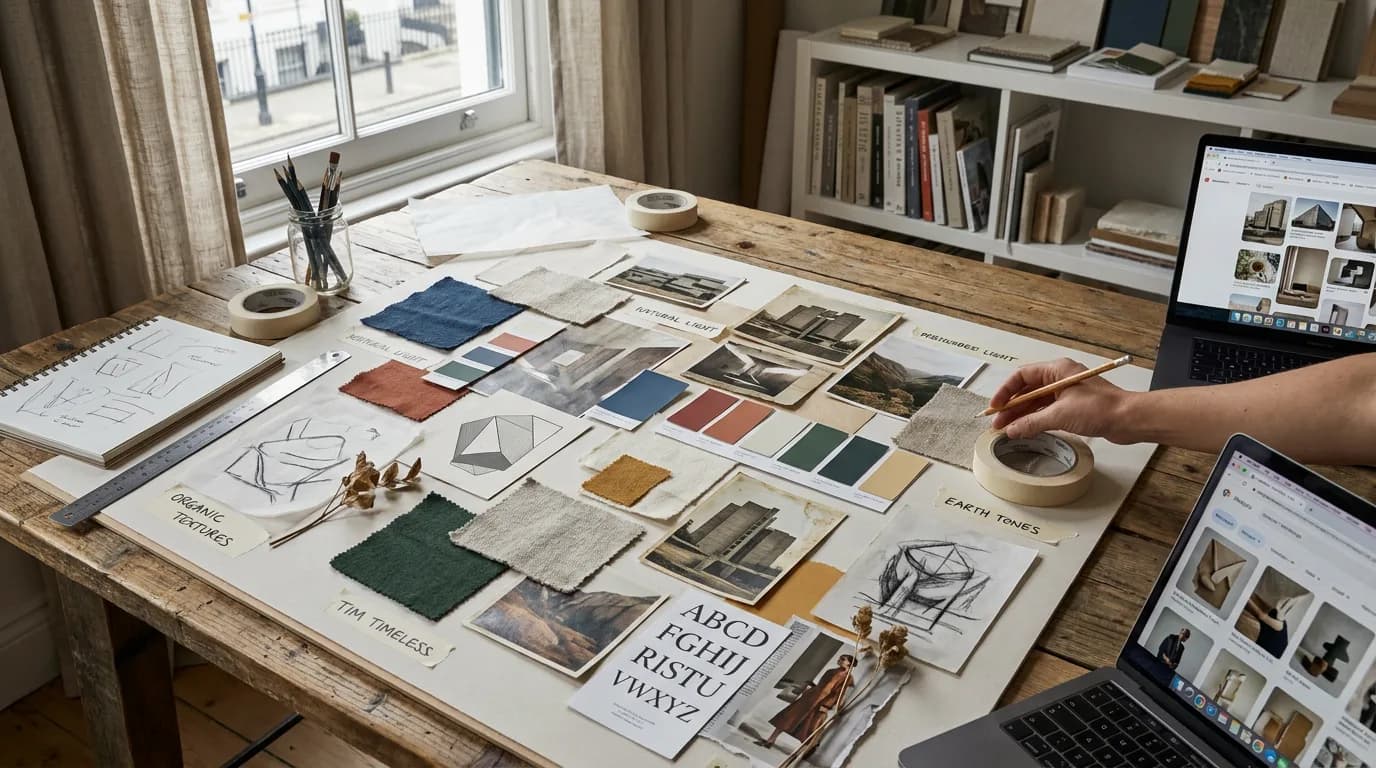
Before starting a design, a single sentence is sometimes not enough.
"Make it modern."
"It should look premium."
"Give it a young, energetic feeling."
These sound good, but for a designer they are still very vague.
A moodboard is one of the tools used to reduce that vagueness.
A moodboard is a reference board that shows visually how a design, a brand or a creative project should feel.
Photographs, colours, typefaces, textures, graphic examples, compositions and sometimes words are brought together.
The aim is not to make the design yet.
It is to build its world first.
What does the word mean?
"Mood" means a state of feeling or an atmosphere.
"Board" is a panel.
So we can simply think of a moodboard as a board of feeling and atmosphere.
It helps to explain not only how a design will look but how it will feel.
For a coffee brand, for instance, a moodboard might use:
warm coffee tones,
natural wooden surfaces,
the feeling of analogue photography,
plain typefaces,
close-up photographs of coffee,
soft light.
There is no logo, no packaging and no advertising design yet.
But an idea has begun to form about the world the brand will live in.
Why is a moodboard made?
Because "good design" may not mean the same thing to everyone.
When a client says "minimal and premium", the picture in the designer's head and the picture in the client's head can be completely different.
The moodboard builds a shared visual language at that point.
For example, instead of:
"Premium"
saying:
Black and off-white, generous space, fine serif typefaces, high-contrast photography and plain compositions.
makes the conversation far more concrete.
That is one of the most important functions of a moodboard:
Turning abstract ideas into a visual language.
A moodboard is not a design
The distinction matters.
A moodboard is not the final design.
It is not a logo.
It is not an advertising visual.
It is not a brand identity.
Most of the time the images used in it will not appear in the final design at all.
The aim here is less to say:
"We are going to make something like this."
than to say:
"We want to create a feeling like this."
What can a good moodboard contain?
The content changes from project to project.
But these elements are usually of use:
Colours
They show the basic colour world of the project.
Warm?
Cool?
Vivid?
Monochrome?
Pastel?
Dark and dramatic?
Photographs
They show what kind of photographic world the brand or project might have.
Different approaches can be set, such as:
natural light,
studio shooting,
analogue photography,
high contrast,
close-up,
wide angle.
Typography
It can show the character of the typefaces that might be used.
Serif?
Sans serif?
Geometric?
Minimal?
Full of character?
Textures
Materials such as paper, metal, concrete, fabric, wood or digital surfaces can strengthen the atmosphere of the design.
Graphic approach
References can be added for lines, geometric shapes, the use of photography, illustration or other graphic techniques.
Words
Sometimes a few words can be part of a moodboard too.
For example:
Plain / Bold / Natural / Technological / Trustworthy / Young
These words support the idea behind the visual world.
A moodboard is not putting images side by side
There is an important point here.
Finding twenty beautiful images on Pinterest and setting them side by side does not on its own make a good moodboard.
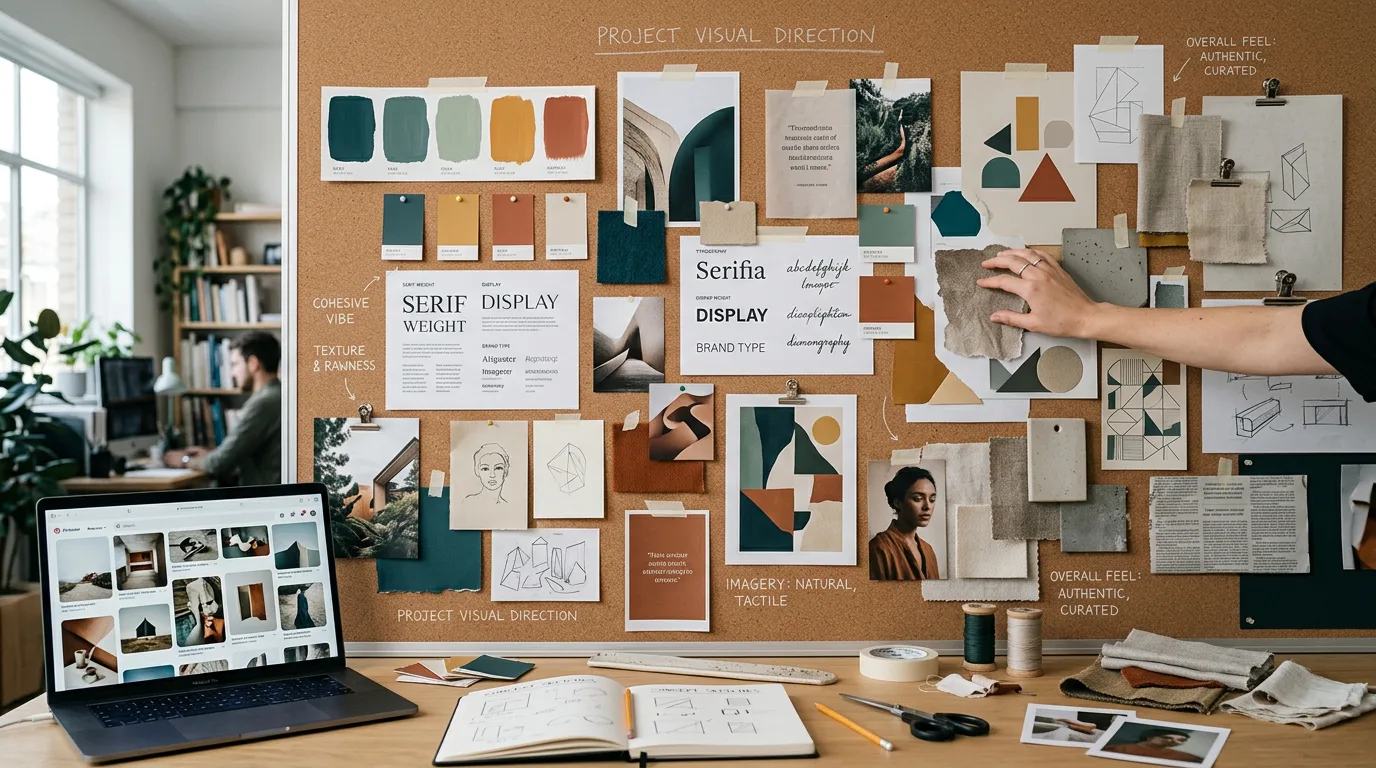
Because what matters is not that the images are beautiful one by one; it is that together they tell the same world.
One image can be very elegant.
Another can be very creative.
A third can be very inspiring.
But if they all belong to different worlds, what comes out is not a design direction, only a visual collage.
In a good moodboard there is a relationship between the images.
The colours support one another.
The photographic language is consistent.
The typographic approach carries the same feeling.
The compositions complete one another.
So the moodboard has a visual unity of its own.
When is a moodboard made?
Usually in the early stages of the creative process.
In a brand renewal the process might run like this:
Brief → Research → Moodboard → Creative direction → Design → Application
And in an advertising campaign:
Brief → Idea → Moodboard → Art direction → Key visual → Applications
Here the moodboard works as an intermediate layer where the creative idea turns into a visual world.
A shared language between client and designer
This is perhaps the most practical use of a moodboard.
When a client says:
"Make it a bit younger."
the designer may have to guess what that means.
But over a moodboard it becomes possible to ask:
"Should we move in this direction, or towards something more corporate?"
So some decisions can be made before the design begins.
Which helps to reduce the revision process later.
Is a moodboard the same as a styleboard?
The two terms are sometimes used in place of one another.
But there is a small difference of approach between them.
A moodboard tends to describe the general atmosphere, feeling and creative direction of a project.
A styleboard tends to focus more definitely on the parts of the visual style that will be used.
A moodboard might say:
"This brand should feel natural, calm and warm."
A styleboard shows more clearly how that will be done:
"This colour palette, this typography, this photographic language and this graphic approach will be used."
The distinction is not drawn the same way on every project. What matters is the purpose the board serves in that project.
Why is a moodboard an important part of the creative process?
Because design is not only making things look good.
A design has a character.
A brand has an atmosphere.
An advertising campaign has a world.
The moodboard lets us think about the limits of that world before the design begins.
In a sense it asks the designer, before the question:
"How will this work look?"
another one:
"How will this work feel?"
What does a good moodboard tell us?
Looking at a well-made moodboard, you do not yet see the final design.
But you can understand which way the final design is going.
The colours may not be settled.
The logo may not be designed.
The photographs may not be taken.
But the atmosphere is clear.
And for the creative process, that is sometimes exactly what is needed first.
TRIUS CREATIVE | Design Glossary
Design Glossary #04 — Moodboard
In the next glossary let us open up another design term together.
Because in design there is sometimes a large idea behind even the smallest word.
Read next
What Is Typography? | Design Glossary
What is typography? Type, font, kerning, tracking and leading explained, and the part writing plays in design and in a brand's communication.
What Is a Key Visual? | Design Glossary
What is a key visual and what is it for? The importance of the main visual idea in an advertising campaign, where it is used, and how it differs from a logo.
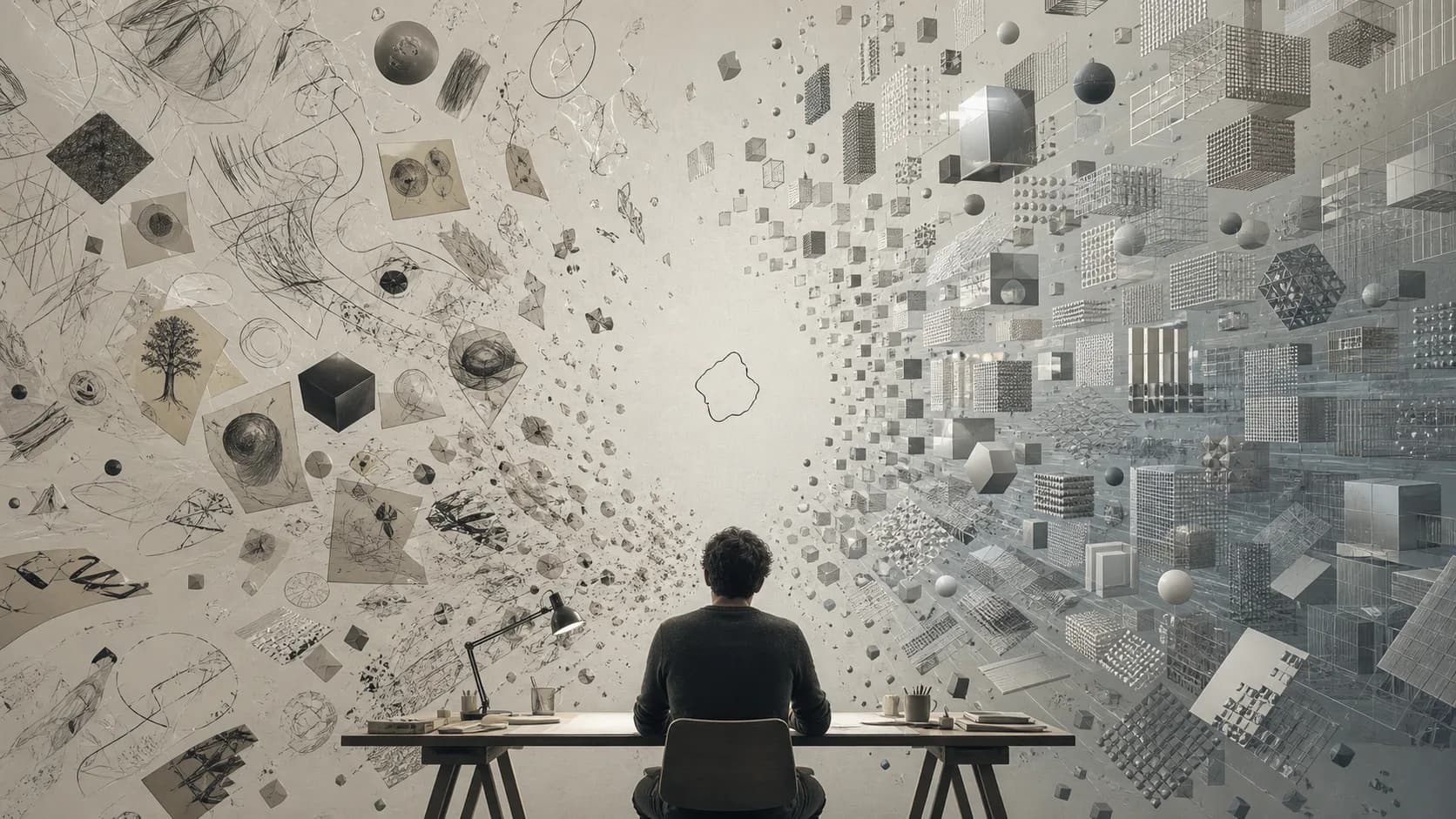
Is Artificial Intelligence Stopping Us From Having Ideas?
How is artificial intelligence changing the way designers arrive at ideas? A look at the relationship between AI and creativity, at the designer's role, and at the future of creative thinking.