Magnum Photos and Ara Güler: Seeing a City
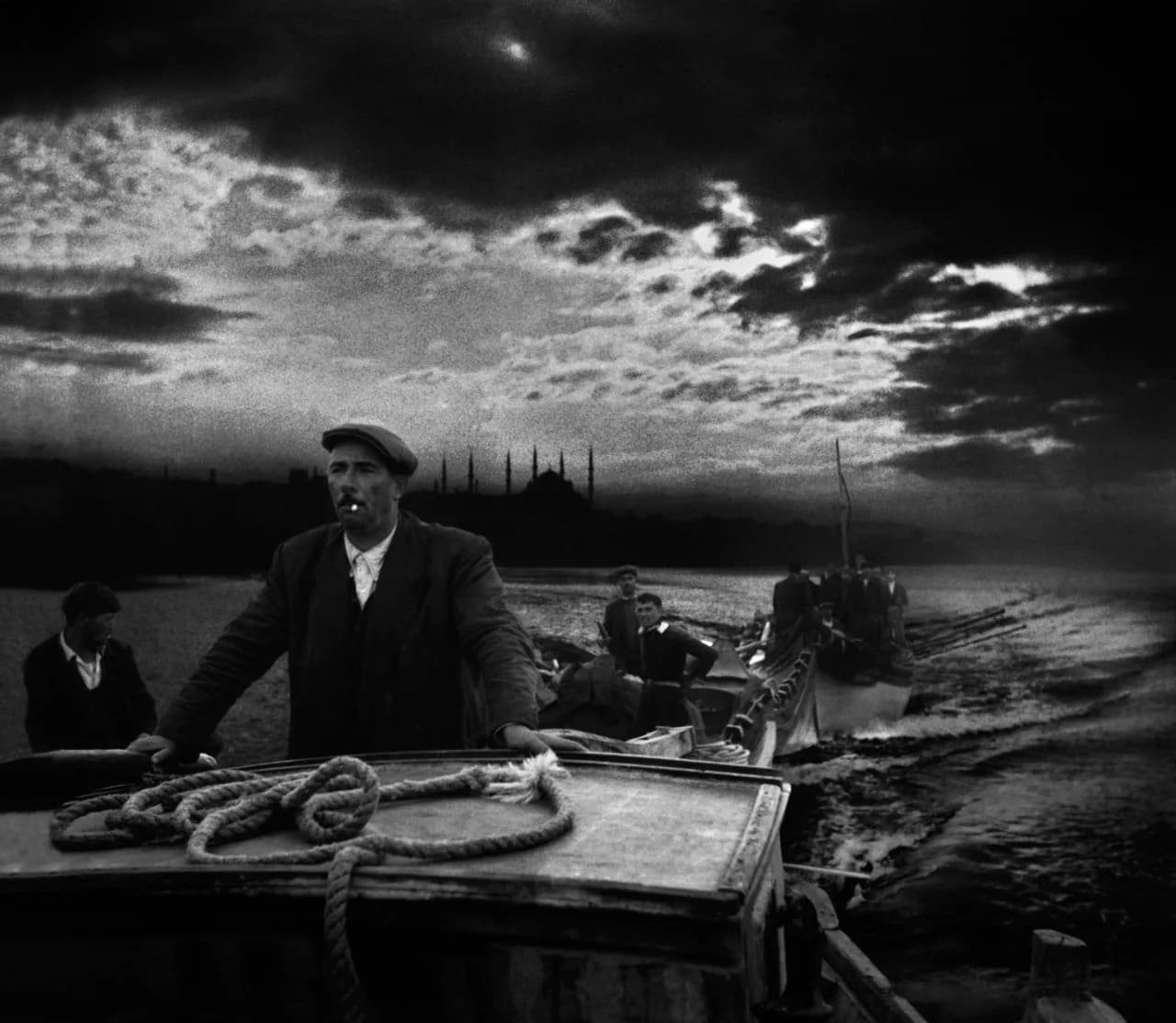
Photography does not always record only what we see.
It records a point of view, a time, and even the memory of a city.
Seen that way, Magnum Photos is not simply a group that brought important photographers together; it is a body that changed the way photography tells the world. Founded in 1947 by Robert Capa, Henri Cartier-Bresson, George Rodger, David Seymour and William Vandivert, Magnum became, over time, one of the most important archives in the history of photography. (Magnum Photos)
And this story has a name that matters for Turkey: Ara Güler.
Ara Güler and Magnum
Ara Güler was not a photojournalist who merely photographed Istanbul. In his pictures Istanbul comes to us whole — its people, its streets, its ferries, its fishermen, its buildings and its daily life.
Working for international publications from the 1950s onwards, Güler shot for Time-Life, Paris Match, Stern and The Sunday Times. After meeting Henri Cartier-Bresson and Marc Riboud he also began to work with Magnum Photos. The sources state that Güler joined Magnum and later left it. (Magnum Consortium)
What matters here is not only the international visibility Magnum gave Ara Güler.
It is the relationship his understanding of photography formed with the Magnum world.
Because in Magnum's understanding too, a photograph is far more than an aesthetic image. A photograph is an instrument for telling the human being, the time, the society and the moment being lived.
The real question: composition
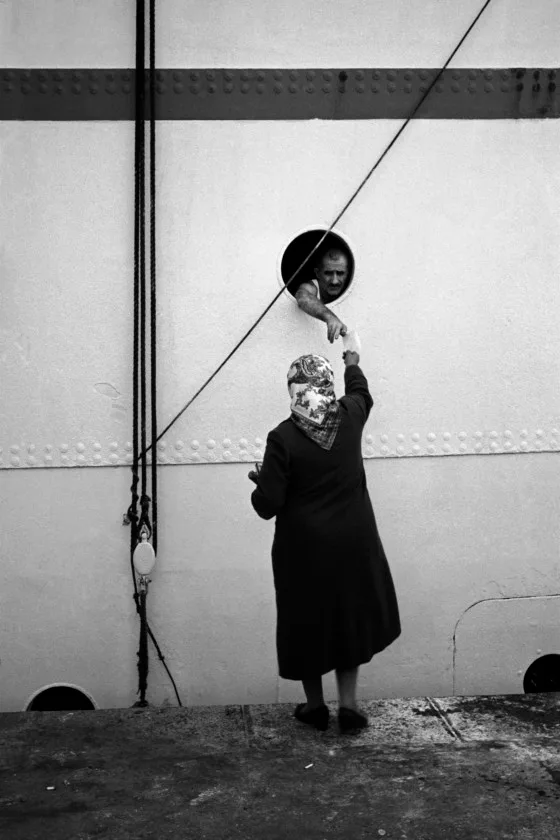
Looking at Ara Güler's photographs, we see the story first. A child, a ferry, a fisherman, a street in the rain.
But look a little longer and a second layer appears:
Composition.
Where the people stand, how the light enters the frame, the relationships between foreground and background, the empty spaces, the lines and the directions of the gazes — all of it strengthens the story of the photograph.
There is a great difference, for instance, between photographing a single person on an Istanbul street and framing that person together with the architecture, the mist, the cables, the vehicles or the other people around them.
In the second case we no longer see a portrait. We see a world.
This is a thoroughly familiar approach from the point of view of design, too.
On a poster it is not enough for the product to look beautiful. Where the product stands in the frame, the space around it, the position of the typography, the light, the colour and the relationships between every other visual element decide how the message will be read.
The composition of a photograph and the composition of a graphic design in fact ask the same question:
Where should the eye look?
Not photographing Istanbul — building it
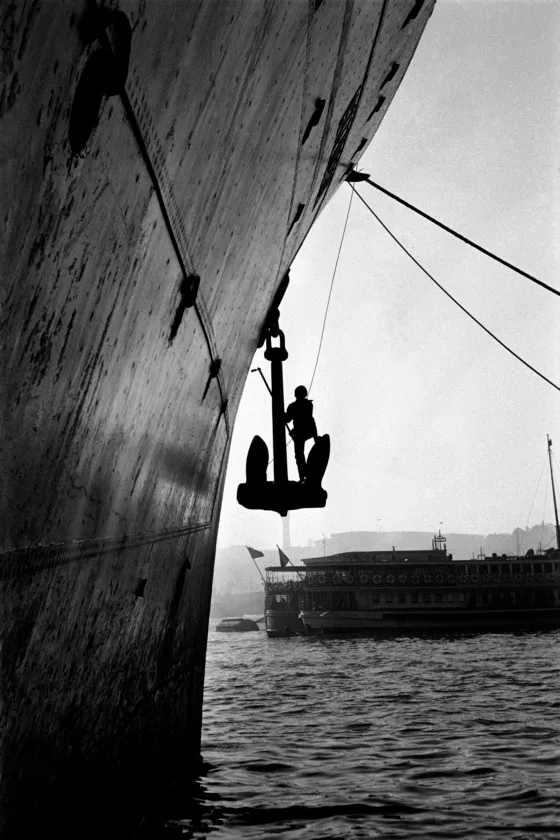
This is one of the reasons Ara Güler's Istanbul photographs are still strong today.
They are not merely views of a city. The elements inside the frame form relationships with one another. People meet architecture, light meets the street, mist meets the sea, movement meets stillness.
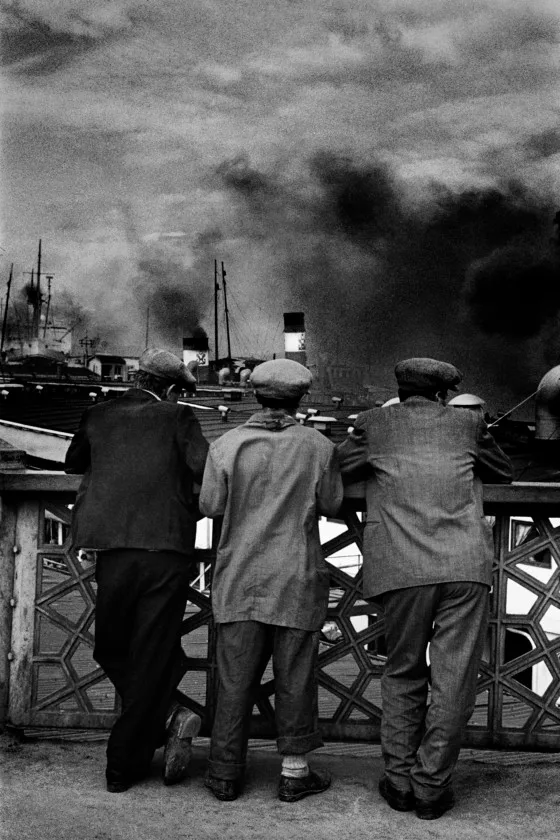
Which is why some photographs go beyond being the document of a period.
They become a way of looking.
That Magnum today brings together different eras, geographies and human stories in an archive of hundreds of thousands of photographs shows this power of the medium as well. (Magnum Photos)
In Ara Güler's photographs we see a very particular answer to that way of looking, and we see it in Istanbul.
Perhaps the most important thing about a good photograph emerges right here:
A camera can look at the same city. But not every photographer sees the same city.
And a good composition makes what we see not only more beautiful, but more meaningful.
Read next
Is Artificial Intelligence Stopping Us From Having Ideas?
How is artificial intelligence changing the way designers arrive at ideas? A look at the relationship between AI and creativity, at the designer's role, and at the future of creative thinking.
The Story of a Colour: Watching Exceptional Colours
A personal look at the history of colour, its role in design and its relationship with creative thinking, starting from TRT 2's documentary series Exceptional Colours.
Seljuk Kufic: From Writing to Geometry
The geometric structure of Seljuk Kufic, the knotted Kufic examples, and what the script has to do with typography, the grid, rhythm and design.